
During my time at Perfit, I was asked to give a 70% work, 20% self-driven project, 10% research directive. I saw how
expensive our service trips to maintian milling machines for our clients were, and realised we lacked proper tools to
help train our clients on how to deal with issues.
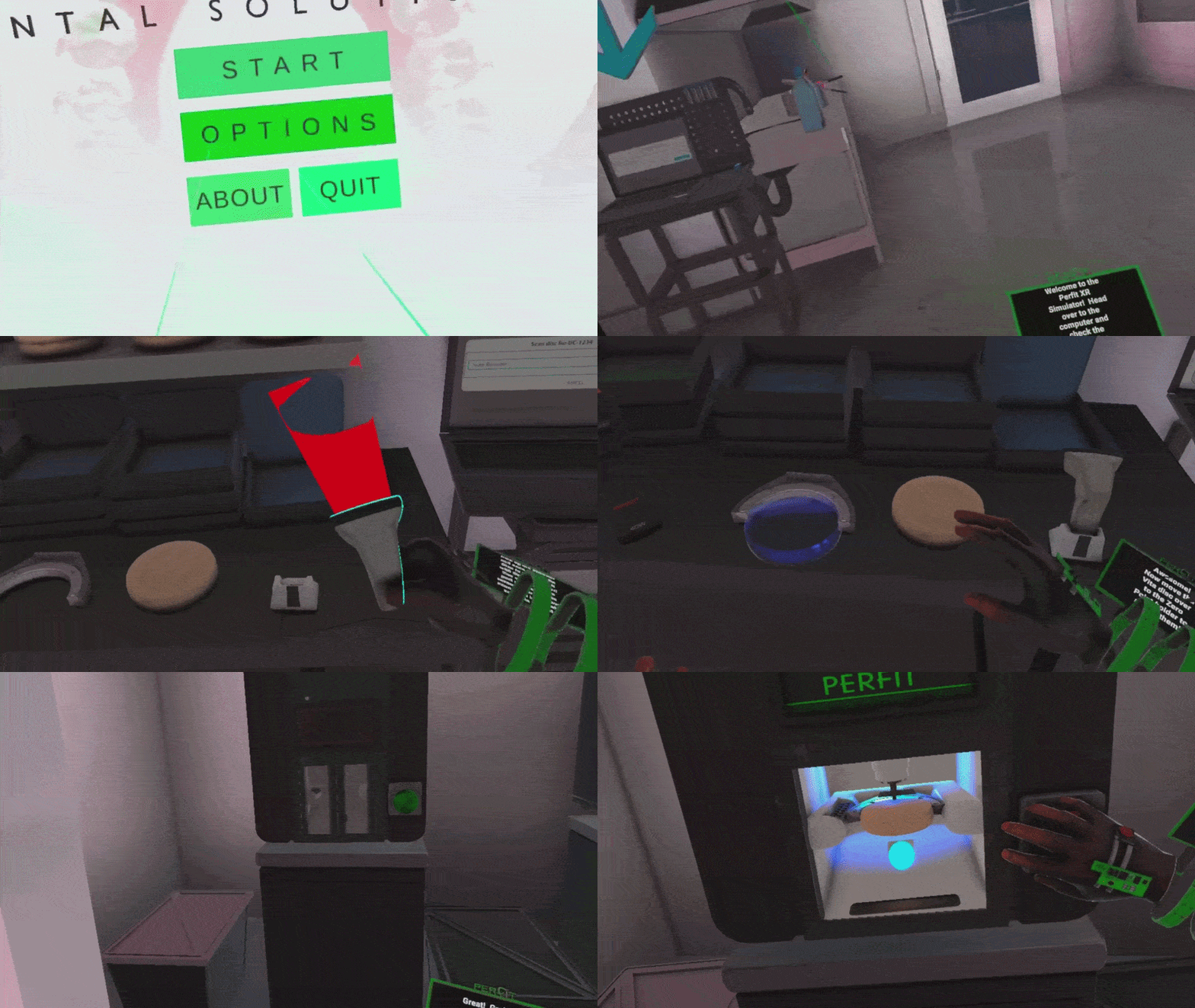
I decided to build a vr training system to help clients understand the process for creating dentures with our mills,
and another module to help troubleshoot when common issues would arise.
I built the training simulator as a standalone apk that could be loaded onto a meta quest 2. This created some issues
as the quest 2 had considerably contraints working within the snapdragon android processors limitations. I wanted the
simulation to look as realistic as possible, so after building out a simple enum-based game manager, I got to work on
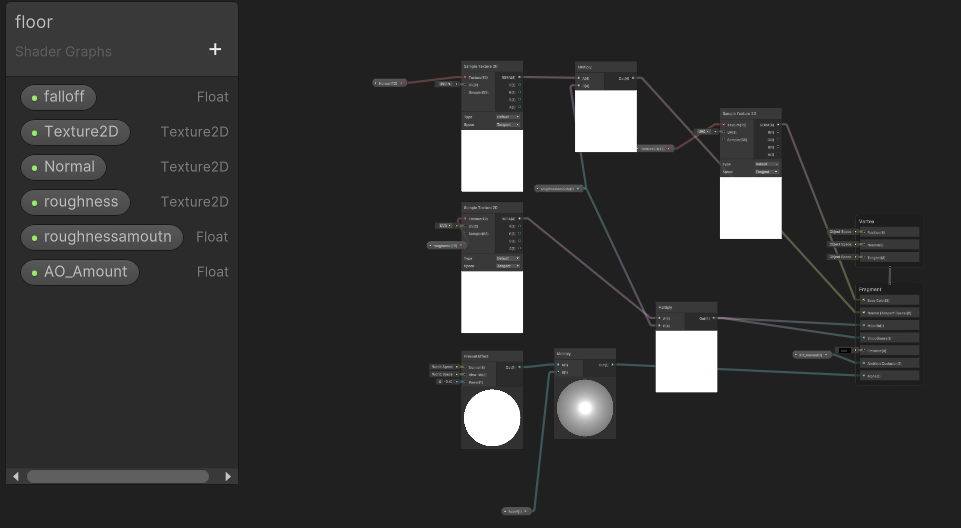
doing some old-school texture optimization. I have always disliked sphere based reflection captures, so I modified
the floor texture to fall off based on the angle of the headset multiplied by the fresnel of the floor geometry. This
allowed me to copy simple geometries from the space and draw them a second time below the floor, creating the illusion
of a planar reflection.
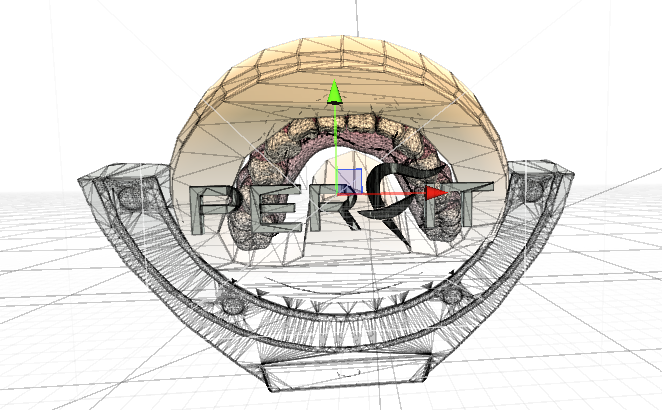
 I modeled everything in blender and did all of my texturing in substance painter. Larger repeating items used a
trimsheet to maintain a high texel density, and some of the hero props shared 1k texture sheets to save space.
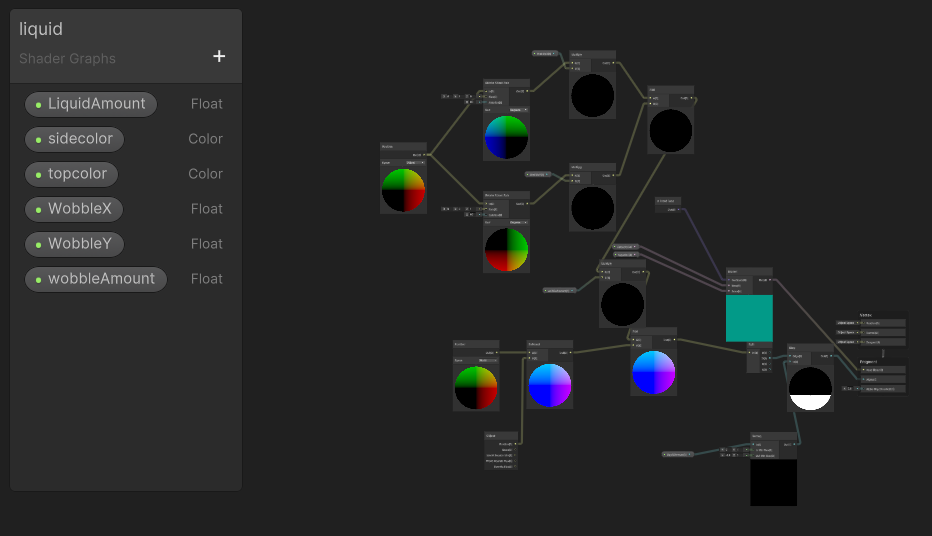
Using Unitys shader graph system I created a liquid shader similar to the one used in Half-Life Alyx. I
created a bottle with the normals inverted on an interior surface, then took the world position and subtracted the xz,
and yz to isolate the x and the z rotations, then multiplied them by a float and added them together, then added that rotation
back to the y rotation.
During my time at Perfit, I was asked to give a 70% work, 20% self-driven project, 10% research directive. I saw how
expensive our service trips to maintian milling machines for our clients were, and realised we lacked proper tools to
help train our clients on how to deal with issues.
I decided to build a vr training system to help clients understand the process for creating dentures with our mills,
and another module to help troubleshoot when common issues would arise.
I built the training simulator as a standalone apk that could be loaded onto a meta quest 2. This created some issues
as the quest 2 had considerably contraints working within the snapdragon android processors limitations. I wanted the
simulation to look as realistic as possible, so after building out a simple enum-based game manager, I got to work on
doing some old-school texture optimization. I have always disliked sphere based reflection captures, so I modified
the floor texture to fall off based on the angle of the headset multiplied by the fresnel of the floor geometry. This
allowed me to copy simple geometries from the space and draw them a second time below the floor, creating the illusion
of a planar reflection.
I modeled everything in blender and did all of my texturing in substance painter. Larger repeating items used a
trimsheet to maintain a high texel density, and some of the hero props shared 1k texture sheets to save space.